
Epioxa™ Cross-Linking (CXL) in New Jersey
Epioxa™, FDA-Approved to Slow the Progression of Keratoconus
At NJ Eye and Ear, we offer Epioxa™ corneal cross-linking, an advanced FDA-approved approach designed to enhance both patient comfort and treatment precision. This treatment is designed to stop the progression of keratoconus and other corneal conditions, helping to preserve vision and reduce the need for more invasive treatments in the future.
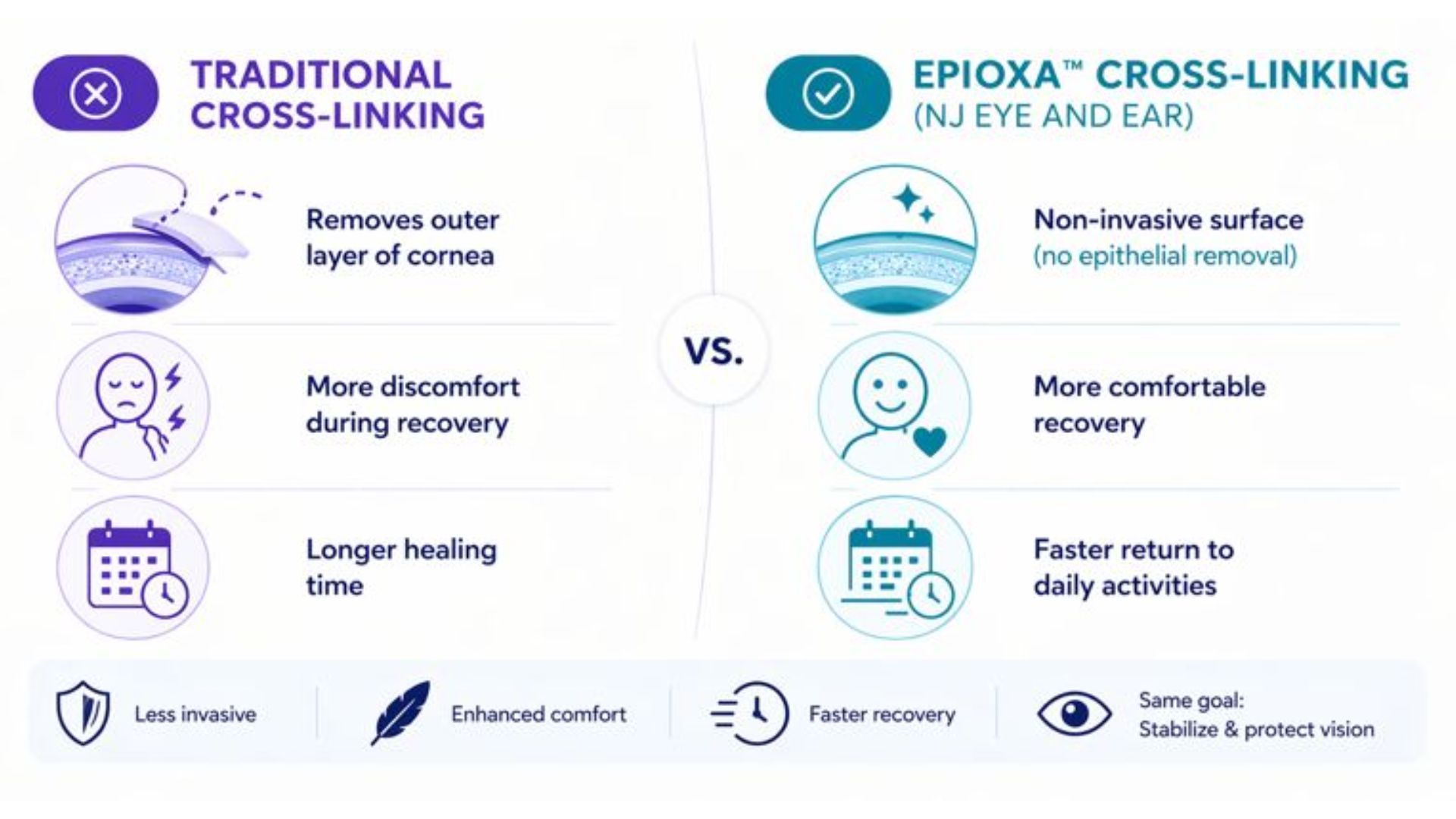
Unlike traditional cross-linking methods that require removal of the outer corneal layer (epithelium), Epioxa™ is performed with the epithelium intact—making it a less invasive, more comfortable experience for many patients.

What is Epioxa™ Corneal Cross-Linking?
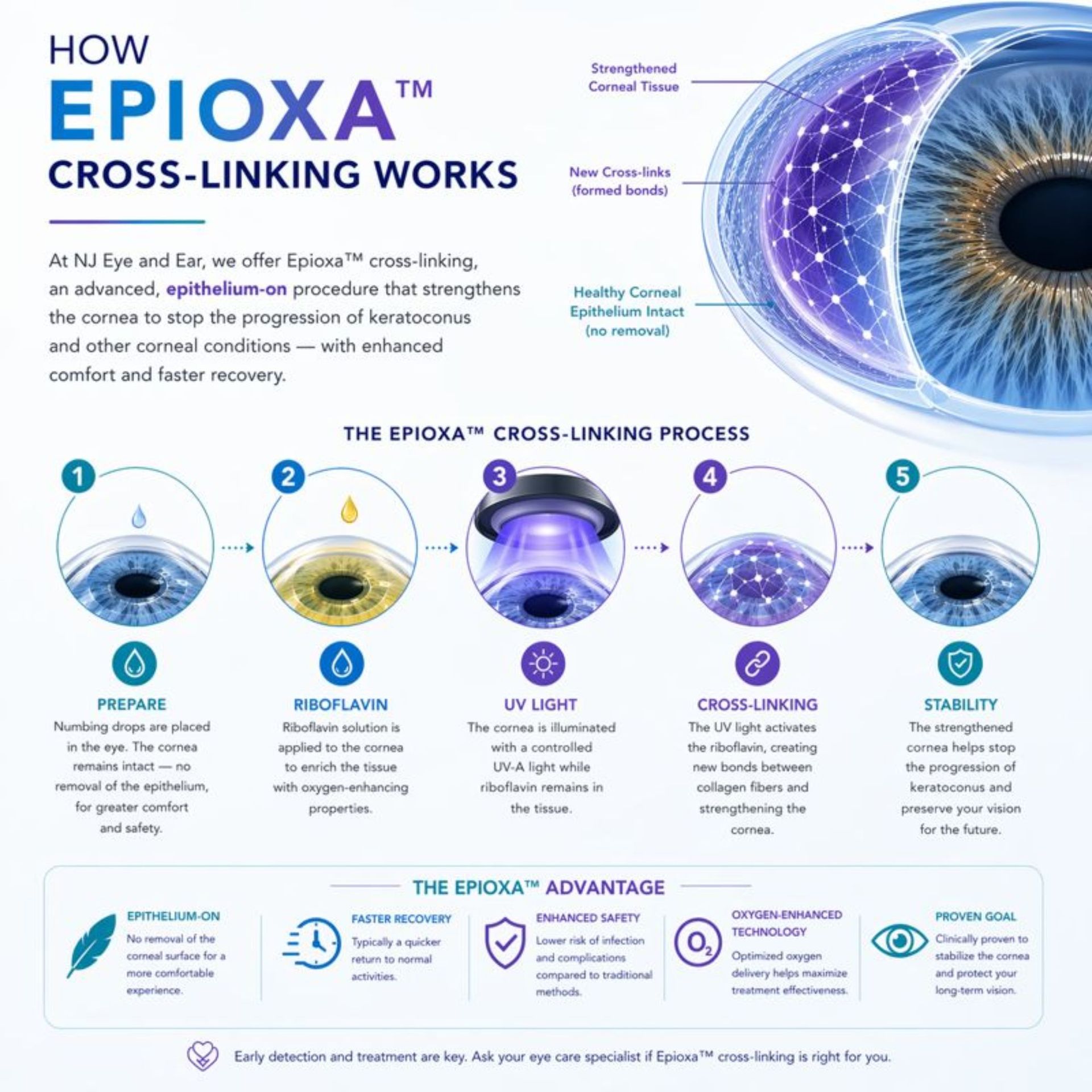
Corneal cross-linking is a procedure that strengthens the cornea (the clear front surface of the eye) using a combination of vitamin B2 (riboflavin) eye drops and UV light.
This process helps:
- Stabilize the cornea
- Prevent further vision deterioration
- Preserve long-term eye health
Who is it for?
Cross-linking is most commonly recommended for patients with:
- Keratoconus (progressive thinning of the cornea)
- Corneal ectasia (often after LASIK)
- Worsening vision due to corneal instability
Early detection is key! Treating the condition sooner can help prevent permanent vision loss.
Why Epioxa™ Cross-Linking?
- More Comfortable Experience: No removal of the corneal surface means less irritation and a smoother recovery.
- Faster Recovery Time: Patients can typically return to normal activities sooner compared to traditional methods.
- Reduced Risk of Complications: Keeping the cornea intact helps lower the risk of infection and improves overall safety.
- Advanced Oxygen-Enhanced Technology: Epioxa™ uses optimized oxygen delivery to help maximize the effectiveness of treatment.
- Proven Goal: Stabilization. Just like traditional cross-linking, the goal is to stop progression and protect long-term vision.

Traditional vs Epioxa™ Cross-Linking
Meet our Specialist
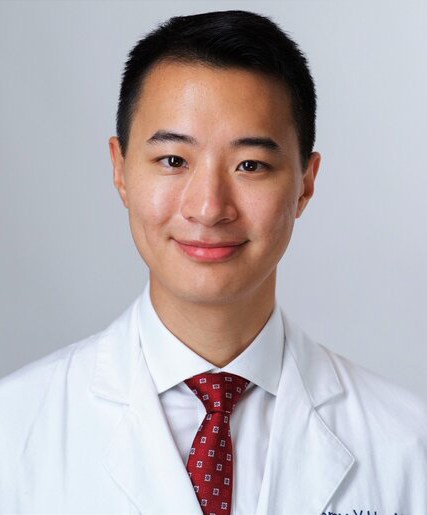
Jimmy Hu, M.D. is a board-certified ophthalmologist, corneal, cataract and refractive specialist. He has extensive expertise in managing complex corneal conditions like keratoconus, and uses state-of-the-art technology and techniques to ensure superior outcomes. Dr. Hu has been trusted by fellow surgeons, pilots, and athletes to protect and restore their vision.